
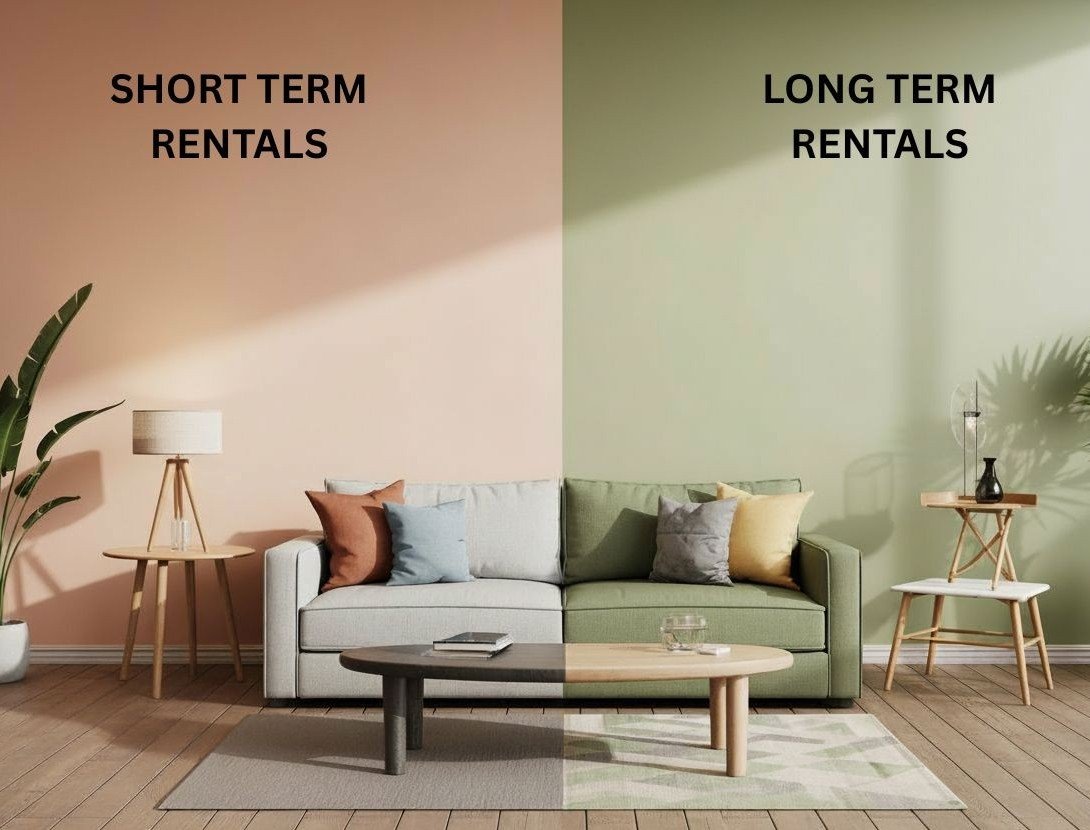
The rental property market offers investors two distinct paths: short-term rental services like Airbnb and Booking.com vs traditional long-term rentals. Each approach comes with unique benefits, challenges, and financial implications that can significantly impact your investment returns. Understanding these differences is crucial for making informed decisions that align with your financial goals and risk tolerance.
Understanding Short-term Rental Services
Short-term rentals typically involve renting properties for periods ranging from one night to several weeks. Platforms like Airbnb, Booking.com, and VRBO have revolutionized this market, making it easier for property owners to connect with travelers seeking temporary accommodation.
These platforms handle much of the marketing and booking process, but property owners remain responsible for maintenance, cleaning, and guest communication. The appeal lies in the potential for higher nightly rates compared to monthly rental income when divided by 30 days.
The Long-term Rental Approach
Long-term rentals involve leasing properties to tenants for extended periods, typically six months to several years. This traditional rental model provides steady, predictable income streams with less day-to-day management hassle from property owners.
Long-term rentals often appeal to investors seeking passive income with minimal operational complexity. Tenants handle their own utilities, cleaning, and day-to-day maintenance, while landlords focus on major repairs and property improvements.
Financial Performance: Storytelling with the Numbers
Short-term Rental Earnings Potential
Short-term rentals can generate impressive revenue in prime locations. According to AirDNA data, average daily rates for short-term rentals in major US cities range from $140 – $400 per night, with occupancy rates between 55-75% in popular markets. In Dublin, short-term rental properties can earn an average of $280 US per night, with annual revenues reaching 6-digits for well-positioned properties. European markets like Barcelona, Paris, and Amsterdam show a bit lower patterns, with prime locations requiring the premium rates. However, these higher rates come with seasonal fluctuations and market volatility. Properties in tourist-dependent areas may see dramatic income swings between peak and off-seasons.
Long-term Rental Stability
Long-term rentals provide more predictable returns. US rental yields typically range from 4-8% annually, depending on location and property type. In the UK, rental yields average 3-5% for residential properties, while European markets vary significantly by country and city. The stability advantage becomes clear when examining vacancy rates. Long-term rentals in established markets maintain 90-95% occupancy rates annually, while short-term rentals face greater uncertainty due to travel trends, economic conditions, and regulatory changes.
Operational Requirements and Time Investment
Short-term Rental Management Demands
Operating an outstanding short-term rental requires significant time and attention. Successful hosts or property managers must:
- Guest Communication: Respond to inquiries, manage bookings, and provide customer service
- Frequent Cleaning: Professional cleaning between each stay, typically costing $50-$150 per turnover
- Maintenance and Repairs: Address issues quickly to maintain positive reviews
- Marketing and Pricing: Optimize listings, adjust rates based on demand, and manage multiple platforms
Many owners spend 10-15 hours per week managing a single short-term rental property, or pay to management companies 20-30% of gross revenue for these services. However, managing a short-term rental doesn’t have to demand any hassle. By leveraging technology, many routine tasks can be automated, reducing the workload significantly. For instance, property management software can streamline processes such as booking management, guest communication, and financial reports. Additionally, smart home devices, such as keyless locks, can eliminate the need for physical key exchanges, while automated messaging tools allow for timely and personalized responses to guests. By adopting these solutions, owners can save time, improve efficiency, and enhance the overall guest experience without sacrificing the quality of service.
Long-term Rental Simplicity
Long-term rentals demand considerably less ongoing attention:
- Tenant Screening: Initial time investment in finding quality tenants
- Periodic Inspections: Quarterly or semi-annual property checks
- Maintenance Coordination: Address repair requests as they arise
- Lease Renewals: Annual or bi-annual lease negotiations
Most long-term rental owners spend 2-5 hours per month on property management tasks, making this approach more suitable for passive income strategies.
Market Risks and Regulatory Challenges
Short-term Rental Regulatory Pressures
Cities across the US, UK, and Europe are implementing stricter regulations on short-term rentals. New York City has effectively banned short-term rentals under 30 days in most cases. London limits short-term rentals to 90 nights per year without planning permission. European cities like Barcelona and Amsterdam have restricted new short-term rental licenses and imposed tourist taxes ranging from $2-$5 per night. These regulatory changes can dramatically impact profitability and property values.
Long-term Rental Regulatory Stability
Long-term rentals face more established, predictable regulations. Rent control laws in some markets limit income growth, but the regulatory framework remains relatively stable. Tenant protections have strengthened in recent years, and experienced landlords must comply with these requirements effectively.
Startup Costs and Ongoing Expenses
Short-term Rental Investment Requirements
Initial setup costs for short-term rentals include:
- Furnishing and Decor: $15,000-$40,000 for complete furnishing
- Technology Setup: Smart locks, security systems, Wi-Fi upgrades ($2,000-$5,000)
- Professional Photography: $300-$800 for quality listing photos
- Platform Fees: 3-5% of gross bookings to Airbnb, Booking.com, etc.
Ongoing expenses include higher insurance premiums, frequent furniture replacement, and professional cleaning costs that can consume 25-35% of gross revenue.
Long-term Rental Lower Barriers
Long-term rentals require minimal upfront investment beyond basic maintenance:
- Basic Furnishing: Usually unfurnished, saving $15,000-$40,000
- Technology: Standard security deposits and basic appliances
- Marketing: Minimal listing fees on rental websites
- Platform Costs: Typically under 1% of annual rent
Lower ongoing expenses mean more revenue flows directly to owners, improving net returns even when gross revenue is lower than short-term alternatives.
Tax Implications and Passive Income Considerations
Short-term Rental Tax Complexity
Short-term rentals are often classified as active businesses rather than passive investments, limiting certain tax benefits. However, owners can deduct numerous expenses including:
- Cleaning and maintenance costs
- Furniture depreciation
- Marketing and platform fees
- Travel expenses for property management
The active classification allows for immediate deduction of losses against other income, potentially providing tax advantages for high-income investors.
Long-term Rental Tax Benefits
Long-term rentals qualify for passive activity treatment, allowing for:
- Depreciation Deductions: Spread over 27.5 years in the US, varying timeframes elsewhere
- 1031 Exchanges: Tax-deferred property swaps in the US
- Mortgage Interest Deductions: Full deductibility of financing costs
These tax advantages can significantly improve after-tax returns for long-term rental investors.
Which Strategy Fits Your Investment Goals?
Choose Short-term Rentals If You:
- Seek higher potential returns and can handle volatility
- Enjoy active property management or can afford professional management
- Own property in high-demand tourist areas
- Have significant capital for furnishing and setup costs
- Can dedicate substantial time to optimization and guest service
Choose Long-term Rentals If You:
- Prefer predictable, steady income streams
- Want minimal ongoing time commitment
- Seek truly passive income opportunities
- Have limited capital for property setup
- Own property in residential areas with strong rental demand
Making Your Investment Decision
The choice between short-term and long-term rentals depends heavily on your personal circumstances, risk tolerance, and investment objectives. Short-term rentals can generate higher returns but require more active management and carry greater risks from regulatory changes and market volatility.
Long-term rentals offer stability, predictability, and true passive income potential, making them ideal for investors seeking steady returns without intensive management requirements.
Consider starting with long-term rentals to build experience and steady cash flow, then potentially transitioning select properties to short-term rentals as you develop expertise and market knowledge. This graduated approach allows you to test different strategies while managing risk exposure.
Remember that successful real estate investment requires thorough market research, regardless of your chosen strategy. Analyze local regulations, market demand, and competition before committing to either approach.

